PART 3 - TRUE AIM PLATFORM – LIVE PUTTING LESSON (3-PART SERIES)

In this three-part lesson, putting specialist Russell Surber takes a student through a live putting session using the True Aim Platform, demonstrating how to build a repeatable setup, improve alignment, and gain immediate feedback on roll and face control.

👉 The True Aim Platform is available in our shop.

📲 Follow @RussellSurberGolf for more putting insights and upcoming instructional clips.

Kronos GolfComment
Part 2 - True Aim Platform – Live Putting Lesson (3-Part Series)

In this three-part lesson, putting specialist Russell Surber takes a student through a live putting session using the True Aim Platform, demonstrating how to build a repeatable setup, improve alignment, and gain immediate feedback on roll and face control.

👉 The True Aim Platform is available in our shop.

📲 Follow @RussellSurberGolf for more putting insights and upcoming instructional clips.

Here is Part 2

Kronos GolfComment
True Aim Platform - Now Available

Featuring Instructional Content by Russell Surber

We’re excited to announce the launch of our newest putting training aid, designed to help golfers develop a more consistent setup, improve alignment, and create a truer roll off the putter face. This marks an important step in expanding our training tools—and we’re thrilled to share it with you.

To make sure you get the most out of the product, we’ve partnered with Russell Surber, one of San Diego’s most respected putting specialists, teaching out of the stunning Grand Golf Club at the Fairmont Grand Del Mar. Russell has an incredible eye for detail and a gift for simplifying the putting stroke, making him the perfect collaborator for this project.

Over the coming weeks, we’ll be releasing instructional videos and lesson clips featuring Russell as he walks through how to use the True Aim Platform effectively. These clips come straight from a live putting lesson, giving you real, practical insights into setup, alignment drills, and feedback gates.

If you’re interested in getting one for yourself, the platform is now available in our online shop.

To stay updated on new videos and learn more about how to get the most from your training aid, check back here—or follow Russell on Instagram at @RussellSurberGolf.

More content coming soon!

Three angles of the true aim platform product in green. It is a rectangular shape with mulitple holes and colored green.
Kronos GolfComment
What is the difference between center of gravity and center of mass and how to find it on a putter

The terms center of gravity (CG) and center of mass (CM) are often used interchangeably, especially in golf, because in most cases they are effectively the same. However, there is a slight technical difference:

Center of Mass (CM) is the point where the mass of an object is evenly distributed.

Center of Gravity (CG) is the point where the gravitational force acts on the object.

In the context of golf putters, CG and CM are essentially the same point since the gravitational field is uniform across the putter. Both terms describe the point where, if you could balance the putter perfectly on that spot, it would be stable without tipping. For putters, this point is crucial for ensuring that the sweet spot aligns with the putter’s balance and stability.

Finding the CG/CM on a Putter Face in a 2D Space

To find the CG/CM on the 2-dimensional space of a putter face, follow these methods:

1. Suspension Method (Practical Approach)

• Suspend the putter by attaching a string or holding it by different points along the top edge or sides of the putter head.

• Draw a line vertically downwards from each suspension point. Where these lines intersect will be the CG/CM of the putter head.

• This gives you a good estimate of where the CG is located in a 2D plane on the face.

2. Balancing on a Sharp Edge (Simple DIY Method)

• Place the putter face down on a thin, stable edge (like a ruler’s edge) or on your finger.

• Shift it around until you find the point where it balances evenly without tipping.

• This point on the face indicates the approximate CG/CM.

3. High-Speed Camera and Ball Launch Analysis (Professional Approach)

• Using a launch monitor like the Quintic Ball Roll system, you can analyze ball speed, spin, and direction on impact across the face.

• By comparing putts from various spots on the face, the point with the least deflection and twist will indicate where the CG is located. This is typically used in professional fittings to determine the CG more precisely.

Why It Matters in a Putter

Identifying the CG on the face is essential because hitting it ensures a pure roll with maximum energy transfer, minimal twist, and consistent distance control. If the CG is off-center relative to the sweet spot, it could mean that the putter design needs adjustment for ideal performance.

Kronos GolfComment
What is the sweet spot of a putter and is this important?

The sweet spot of a putter is the exact point on the face where, when struck, the putter transfers maximum energy to the ball with minimal twisting or vibration. It’s usually located at the center of gravity of the putter head, often in the middle of the face. Hitting the sweet spot results in a pure, controlled roll with optimal ball speed and direction.


Why is the Sweet Spot Important?

1. Consistent Ball Speed:

• When you hit the ball on the sweet spot, it receives the ideal amount of energy, resulting in a consistent roll and distance. This is crucial for accurate distance control, helping you avoid putts that are too short or too long.

2. Reduced Twist and Vibration:

• Off-center hits (away from the sweet spot) cause the putter face to twist, creating a vibration that disrupts the feel and control of the putt. Hitting the sweet spot minimizes these effects, providing a smoother feel and a more stable roll.

3. Improved Accuracy:

• A centered hit on the sweet spot keeps the ball rolling on the intended line, which is especially important for straight putts. Mis-hits on the toe or heel of the putter can push or pull the ball off-target, leading to missed putts.

If you are interested is seeing a visualization of this check out our Pure Balanced Certified page linked here.

Finding the Sweet Spot with Technology

Using tools like the Quintic Ball Roll system can help golfers identify their consistency in hitting the sweet spot by analyzing ball speed, face angle, and roll quality. Knowing where the sweet spot is—and consistently hitting it—can greatly improve putting performance, making it an essential aspect for any golfer seeking precision and control on the green.

Finding the Sweet Spot the Old Fashioned Way


1. Hold the Putter Loosely:

• Hold the putter lightly at the grip, letting it rest freely without gripping too tightly. This will help you feel any vibrations.


2. Tap the Putter Face:

• Use a small, solid object (like a pen or pencil) to gently tap the face of the putter across different spots. Start from the toe, move toward the center, and then to the heel.


3. Identify the Point of Least Vibration:

• The sweet spot will be the point on the face where you feel the least vibration or twisting in the putter head. When you tap this spot, the putter will stay steady in your hand without wobbling or vibrating.


4. Verify Your Findings:

• Once you think you’ve found the sweet spot, try hitting a few practice putts. A centered strike should feel solid and produce a smooth roll, while off-center hits may feel more unstable.

Kronos GolfComment
“Which Putter Type is REALLY the Best? The Pros and Cons You Need to Know Before Your Next Round!”

If you’ve ever wondered which putter could shave strokes off your game, we’re diving into the pros and cons of the three most popular putter types: Blade, Mallet, and High MOI. Each one has unique strengths and weaknesses – so read on before making your choice!

1. Blade Putters: The Traditionalist’s Choice

Blade putters are classic for a reason. With a sleek, simple design, they’re favored by golfers who rely on pure feedback and control. But is it the best choice for you?


Blade Advantages:

  1. Great Feel and Feedback: Blade putters give you a clear sense of where you made contact – perfect for players who want to know if they hit the sweet spot.

  2. Consistent Ball Speed for Better Distance Control: Blade putters maintain ball speed better on slight mis-hits, helping you control distance with more precision than mallet or high MOI putters.

  3. Less Ball Speed Loss on Slight Mis-Hits: Blades don’t drop ball speed as much on small off-center hits, which keeps your putts more predictable.

Blade Disadvantages:

  1. More Sideways Drift on Mis-Hits: Blade putters are less forgiving if you hit off-center, so your ball might veer off the target line.

  2. Low Forgiveness: These putters don’t offer much stability on big mis-hits, making it tough if you struggle with consistent contact.

2. Mallet Putters: A Balance Between Forgiveness and Control

Mallet putters offer a middle-ground design that balances forgiveness and feel. They’re ideal if you’re looking for a bit of extra help without sacrificing control.


Kronos Golf Metronome Model Mallet Example

Mallet Mallet Advantages:

  1. Enhanced Alignment Features: Mallet putters often come with alignment guides to help you set up square to the hole.

  2. Decent Forgiveness: They’re not as forgiving as high MOI putters, but they’re more stable than blades.

Mallet Disadvantages:

  1. Heavier Feel: The larger design can feel a bit heavy for players used to a lighter, more agile blade putter.

  2. Moderate Forgiveness Only: It’s not the most forgiving choice, so if you need max stability, you might prefer high MOI.

3. High MOI Putters: Forgiveness Powerhouse

High MOI (Moment of Inertia) putters are the heavyweights of forgiveness. They’re designed to minimize twisting on off-center hits, keeping your putts straighter than ever.


High MOI Advantages:

  1. Maximum Forgiveness on Mis-Hits: High MOI putters stabilize the clubface, making them ideal for staying on line, even on off-center hits.

  2. Consistent Direction Control: These putters are excellent for keeping the ball moving in the right direction, which can be a game-changer on longer putts.

High MOI Disadvantages:

  1. Speed Drop on Mis-Hits: High MOI putters lose more ball speed on mis-hits, potentially leaving you short on putts.

  2. Reduced Feedback: The extra forgiveness sacrifices some feel, so it can be harder to tell exactly where you made contact.


Quick Comparison Table: Putter Advantages and Disadvantages

So, Which Should You Choose?

It all comes down to your priorities:

  1. Looking for control, feedback, and distance consistency? Go with a blade putter.

  2. Want a balanced choice with alignment help? Try a mallet.

  3. Need maximum forgiveness and stability? Go for a high MOI putter.

Conclusion: Find Your Perfect Putter Fit!

Choosing the right putter type can make a significant difference in your game, but the best way to know for sure is to experience it firsthand. If you’re serious about finding the putter that truly suits your style, consider scheduling a putter fitting using the Quintic Ball Roll system. This advanced system analyzes your putter’s performance on key metrics like ball speed, direction control, and impact consistency. With precise insights, you’ll be able to see which putter type—blade, mallet, or high MOI—gives you the best results, taking your putting game to the next level.

Kronos GolfComment
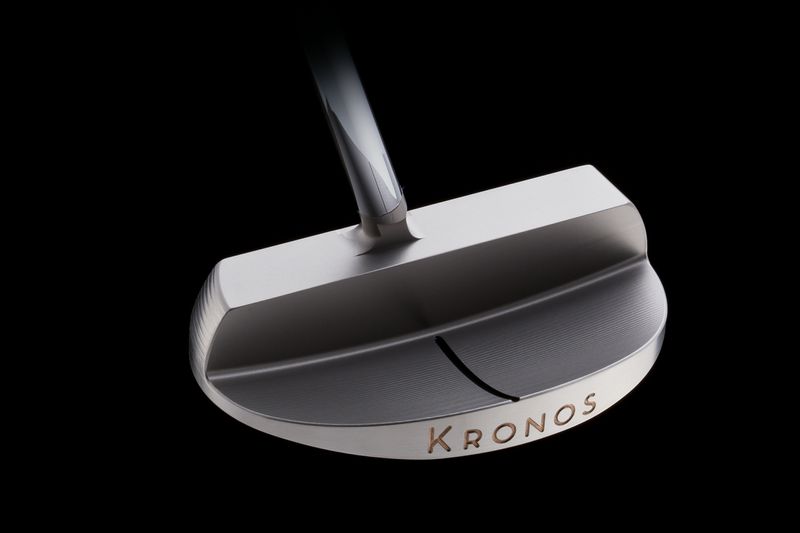
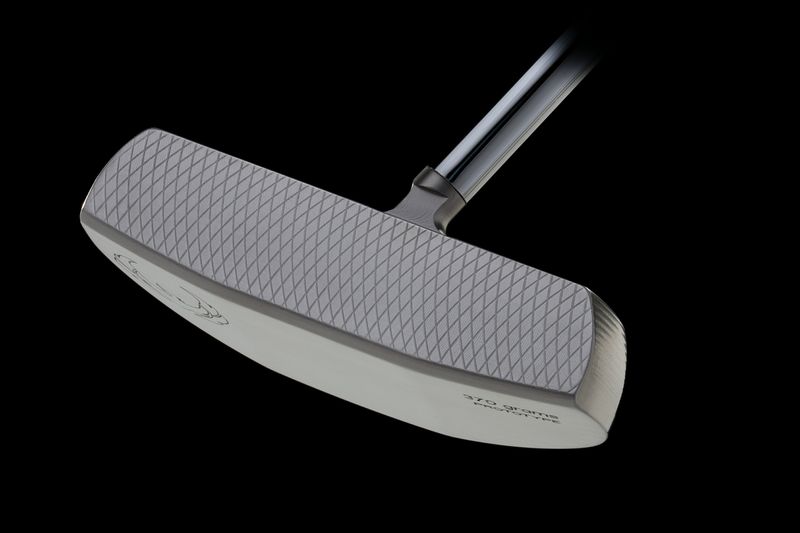
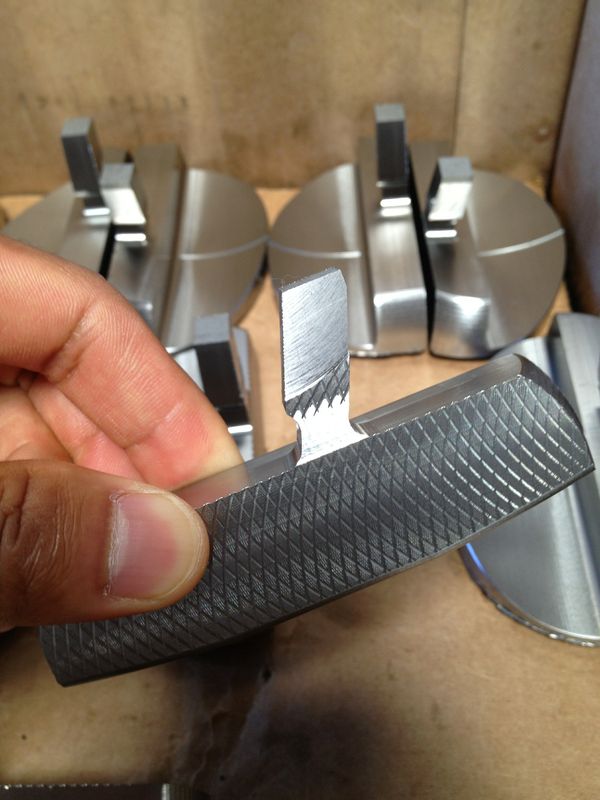
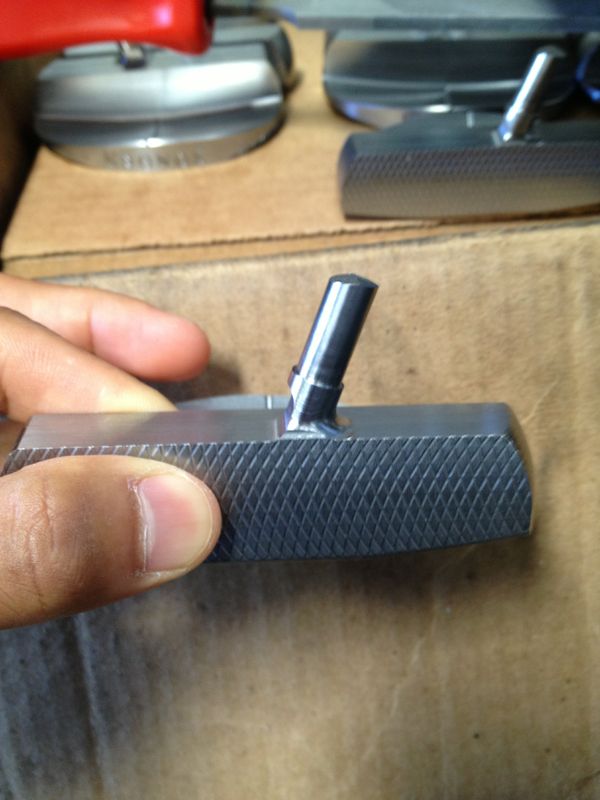
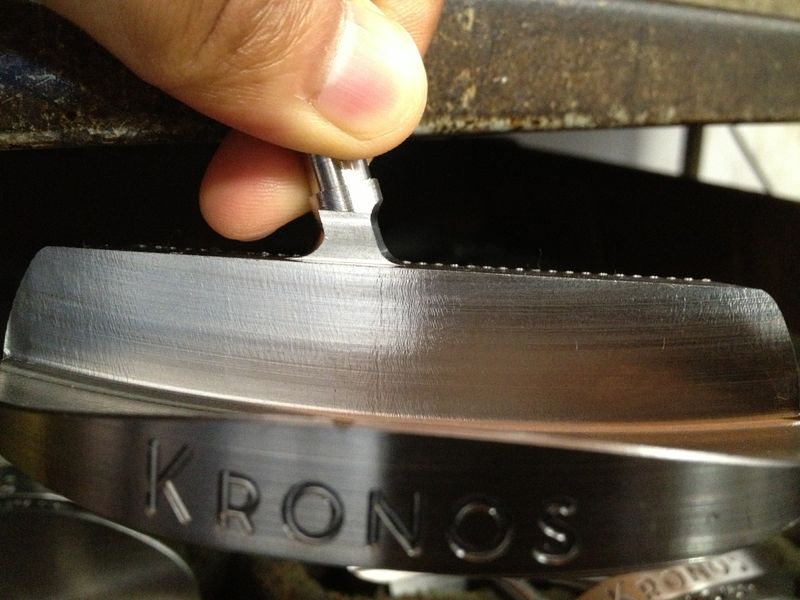
Mandala Stainless Steel Putter now available! #kronosgolf #playsolid #golf #putter #mandala

I know this isn't exactly a technical post, but the last post was about the Mandala and it ended with on sale soon. Well... These center shafted beauties are finally ready for play!

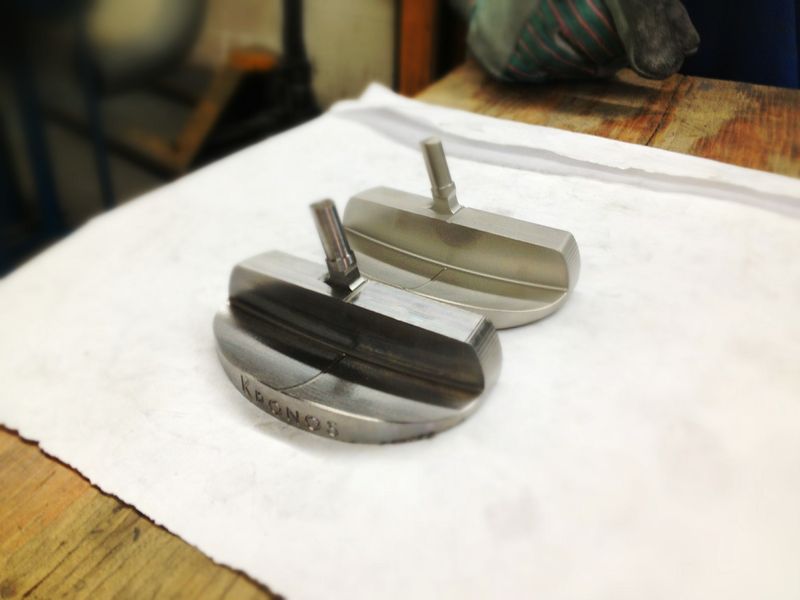
We used a 303 stainless steel which gives off a slightly more firm feel than our 11L17 carbon steel model. This putter features incredible feedback through its one-piece milled design. You can see from some of the pictures below that each head is milled from a solid block of stainless steel creating a seamless transition into the head which provides incredible feel. 

For more details on the specifications of this head check out the stainless steel Mandala page.  

Also check out the dealers page and Kronos Shop to find out how to get one in your hands.  

 -PL

Kronos GolfComment
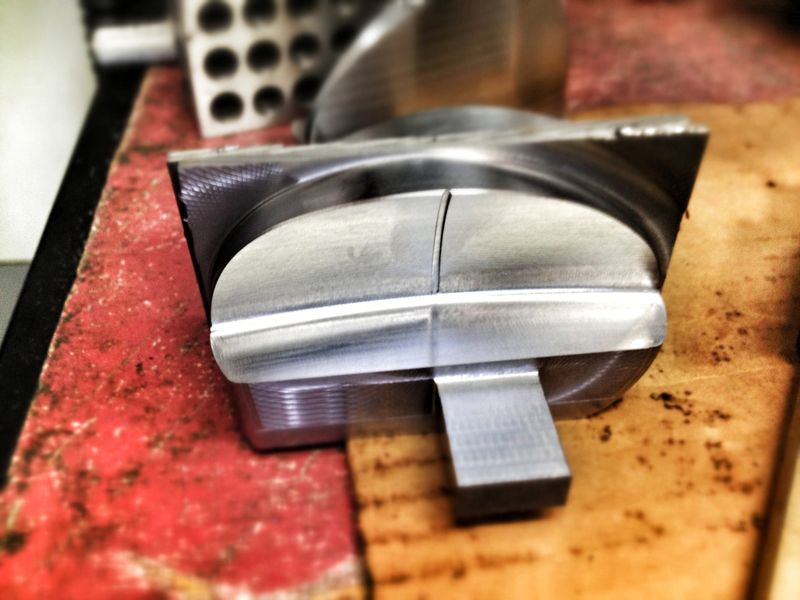
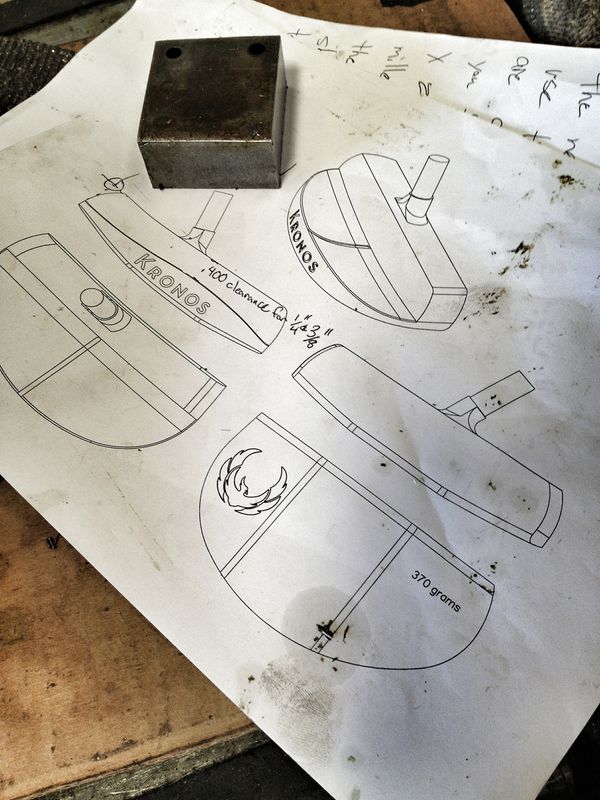
Mandala and Balance. #prototype #golf #milled #balance #madeinUSA

We make sure that all of our putters pass our Balance Blade Test. This is simply a test to make sure the sight line is drawn in the correct spot, along the sweet spot.  

The pictures below of the Mandala model were taken at an early stage of prototyping; however, even then we must make sure that the mass is all in the right places and that the sight line is drawn in the proper place. 

This model is currently in production and will be available for sale soon. 


Kronos GolfComment
D'Arcy Sweet Spot Location

Many of you have asked where the sweet spot is located on the D'Arcy.  It is actually very close to the heel, right in the middle of the LinkSoul logo (see picture).  On the old hand-forged blades the sweet spot was much closer to the neck.  We were able to move the sweet spot toward the toe by boring deep into the neck for the hosel and adding mass to the toe.  Overall we find this makes it easier and more pleasurable to play.  Most people tend to align the ball too far toward the toe so this modification should help with that as well.

​The red line indicates the center of gravity

​The red line indicates the center of gravity

What is lie angle?

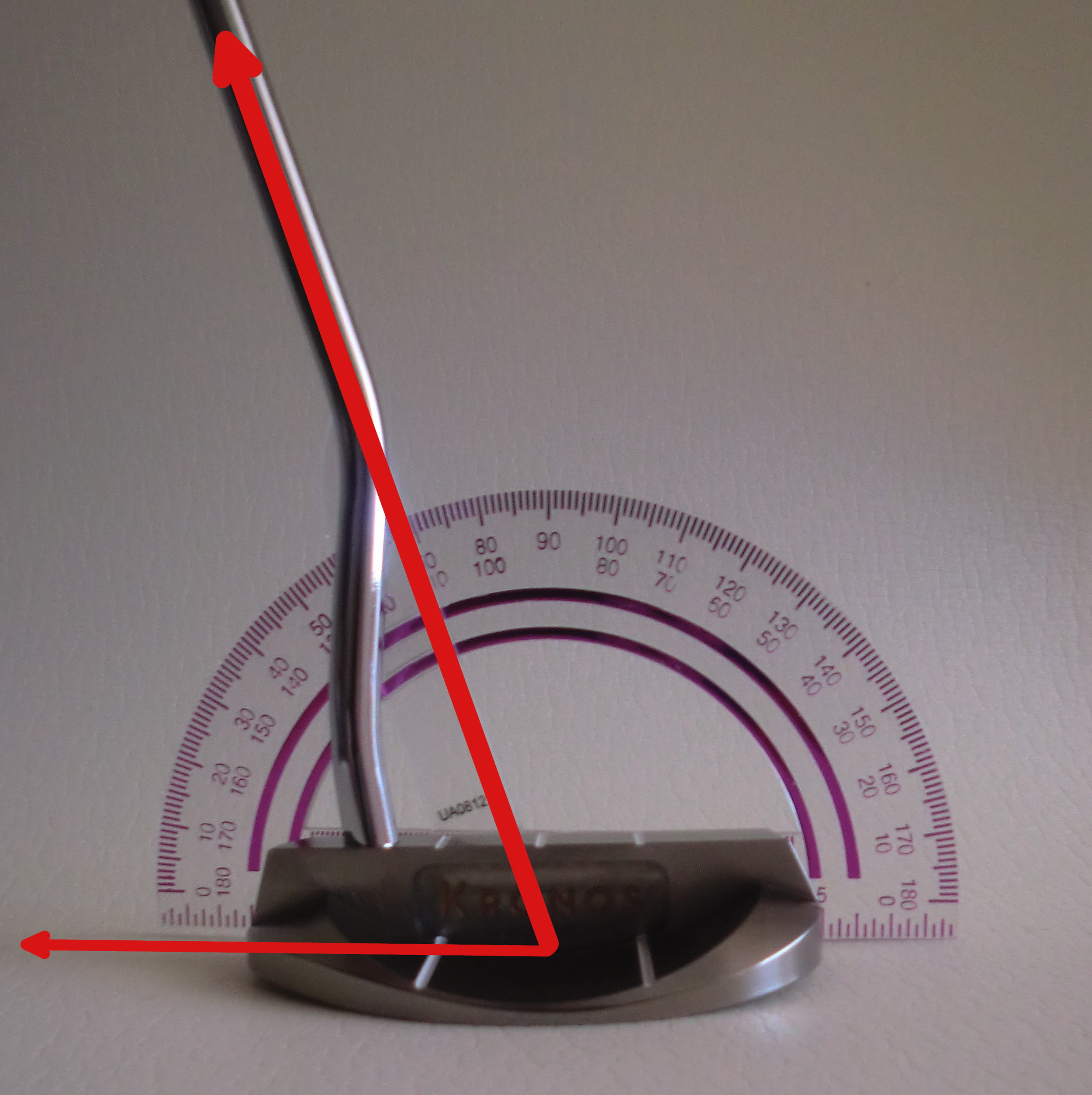
Lie angle is angle between the shaft and the sole of the putter.  Under USGA rules it must be less than 80 degrees (USGA Rules Appendix II 1.d.(i)).  A larger angle creates a more "upright" club, and a small angle may create a "flat" lie.  70-72 degrees is very common in modern putters.  Older putters tend to be more upright at 72 or more degrees of lie.

Using a putter with a lie angle not suited to your setup and swing can result in putts not going on your intended line (more on this in an upcoming post).  Fortunately, most putters can be bent to custom fit the lie angle to the golfer.  Ask a clubfitter or the manufacturer for more information.​

lieangle1.JPG
Kronos GolfComment
Putter Robot Off-center Test Shots

We tested the Touch putter to see if an off center strike with the robot 0.5 inches in either direction from the sweet spot would affect distance and line. Our putter performed very well. It held it's line as expected and did not lose any distance on heel struck putts. The toe struck putts lost a insignificant amounts of distance on some tests but had others that rolled out the same distance, suggesting distance lost is due to other factors such as inconsistencies in the carpet and possible striking on a corner of a dimple. 

​We plan to do more testing and release the results in a later blog update. 

​--PL

Kronos GolfComment